
A foreigner in Thailand may stay only until the date immigration has granted. Staying even one day longer is an overstay, an offence under Thai immigration law. This guide explains the fine, the re-entry bans and what to do as soon as you realise it has happened.
What counts as an overstay
What matters is your permitted-stay date: the date stamped or recorded by immigration when you entered or when your stay was last extended. It is not the expiry date of your visa, which only tells you until when you can use it to enter. Mixing up the two is the most common cause of overstays.
Remaining in Thailand after your permission has ended is an offence under Section 81 of the Immigration Act B.E. 2522 (1979), punishable by up to 2 years in prison, a fine of up to 20,000 baht, or both.
The fine: 500 baht a day, capped at 20,000 baht
In practice, a person who overstays and comes forward to leave is fined 500 baht per day, up to a maximum of 20,000 baht. The fine reaches the cap after 40 days; staying longer does not raise it, but the re-entry ban grows with time.
The fine is usually paid at the immigration counter before departure. If you cannot pay, you may be held until you can, so bring enough cash.
Re-entry bans: turning yourself in versus being caught
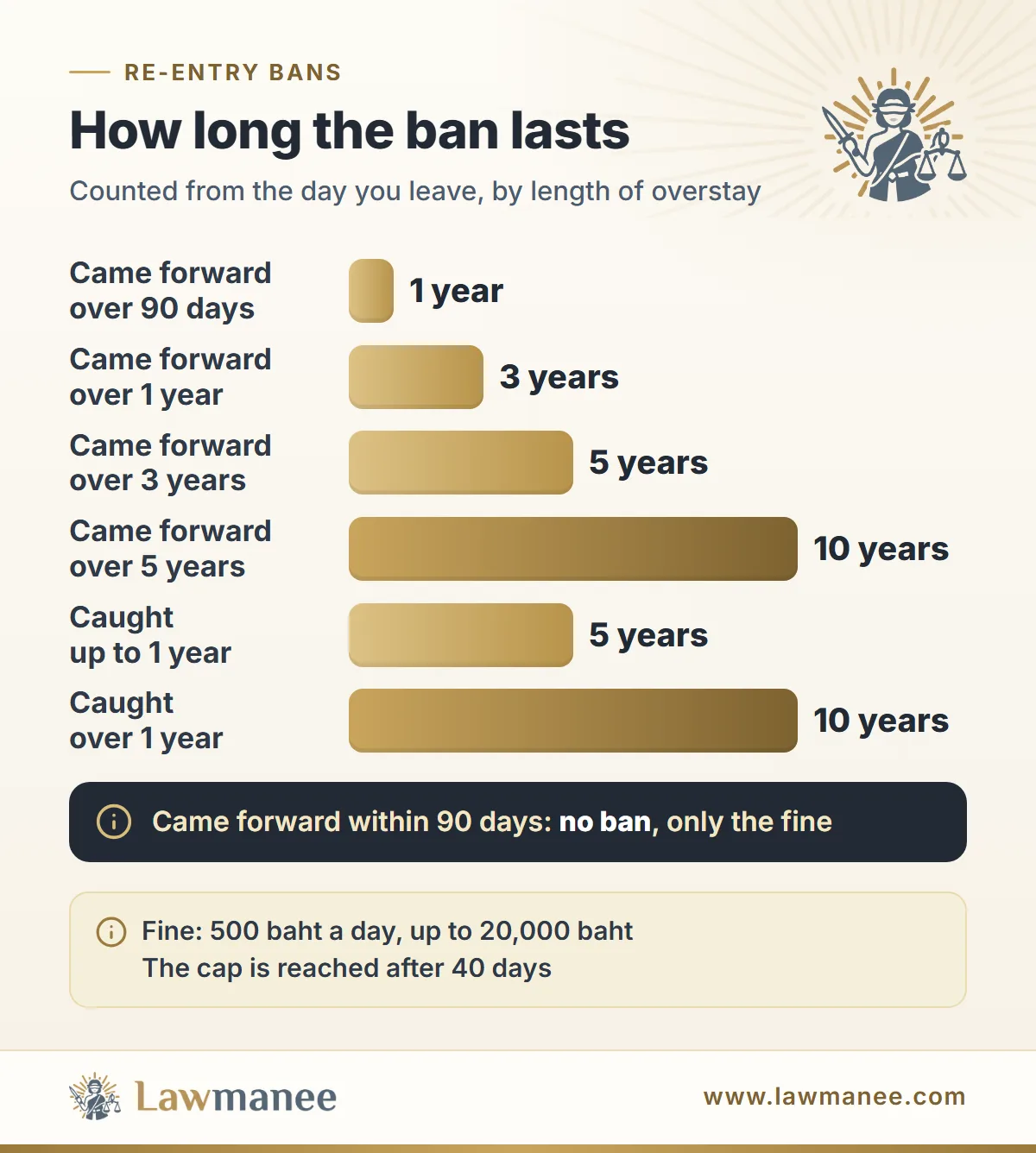
Under the Ministry of Interior order in force since 20 March 2016, the length of the ban depends on how long you overstayed and on whether you turned yourself in or were caught. The ban runs from the day you leave Thailand.
| Overstay | Turned yourself in | Arrested / prosecuted |
|---|---|---|
| Up to 90 days | No ban (fine only) | 5-year ban |
| More than 90 days | 1-year ban | 5-year ban |
| More than 1 year | 3-year ban | 10-year ban |
| More than 3 years | 5-year ban | 10-year ban |
| More than 5 years | 10-year ban | 10-year ban |
Someone who overstays a few weeks and is caught can be banned for longer than someone who overstays for a year and comes forward. A person who is caught may also be prosecuted, detained while awaiting removal, and deported.
Worked examples
- 12 days over, you report at the airport: 12 x 500 = 6,000 baht, no ban.
- 60 days over, you come forward: the fine is capped at 20,000 baht (not 30,000), and there is no ban because it is not more than 90 days.
- 120 days over, you come forward: 20,000 baht plus a 1-year ban from the day you leave.
- 30 days over, found at a police check: possible prosecution and a 5-year ban.
(Figures illustrate the rules above; officers decide each case.)
What to do as soon as you realise
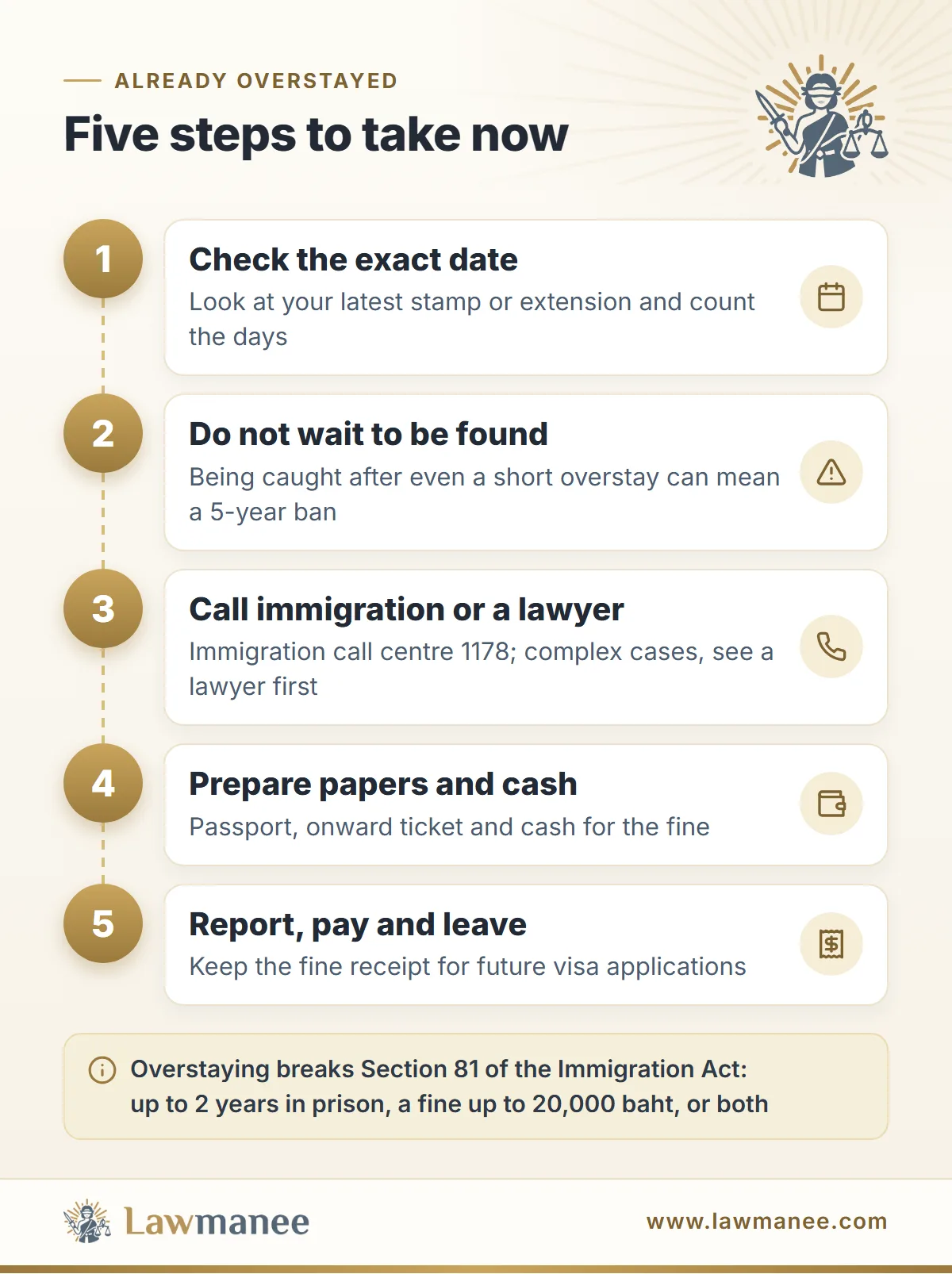
- Check the exact date in the latest stamp or extension in your passport and count the days.
- Do not wait to be found: the longer you stay, the higher the risk of arrest and the longer the ban.
- Contact immigration or a lawyer: the Immigration Bureau call centre is 1178. If your situation is complicated, for example a pending case, a lost passport or family in Thailand, talk to a lawyer before you come forward.
- Prepare documents and money: passport, an onward ticket and cash for the fine.
- Report, pay and leave, and keep the fine receipt for future visa applications.
Do not pay anyone who promises to "clear your record" or "fix the stamp". It does not work and can add a forged-document offence.
How to avoid an overstay
- Put your permitted-stay date in your calendar with reminders weeks ahead.
- Apply for an extension at an immigration office before the date, not after.
- After every extension, check the new date in your passport before leaving the counter.
- If you travel in and out often, always go by the date in your most recent entry stamp.
Talk to an immigration lawyer
With a long overstay, another pending case, or a spouse and children in Thailand, planning before you come forward can reduce the damage a great deal. On Lawmanee you can describe your situation for free, without personal details, and interested lawyers reply in the platform chat, or search immigration lawyers by province and language.