
In Thailand, drunk driving is a criminal offence, not a traffic ticket you simply pay and forget. Since the Land Traffic Act (No. 13) B.E. 2565 came into force on 5 September 2022, the penalties, especially for repeat offenders, have become much heavier. This guide explains when you count as drunk, the penalty for each situation, and what to do if you are charged.
When you count as "drunk"
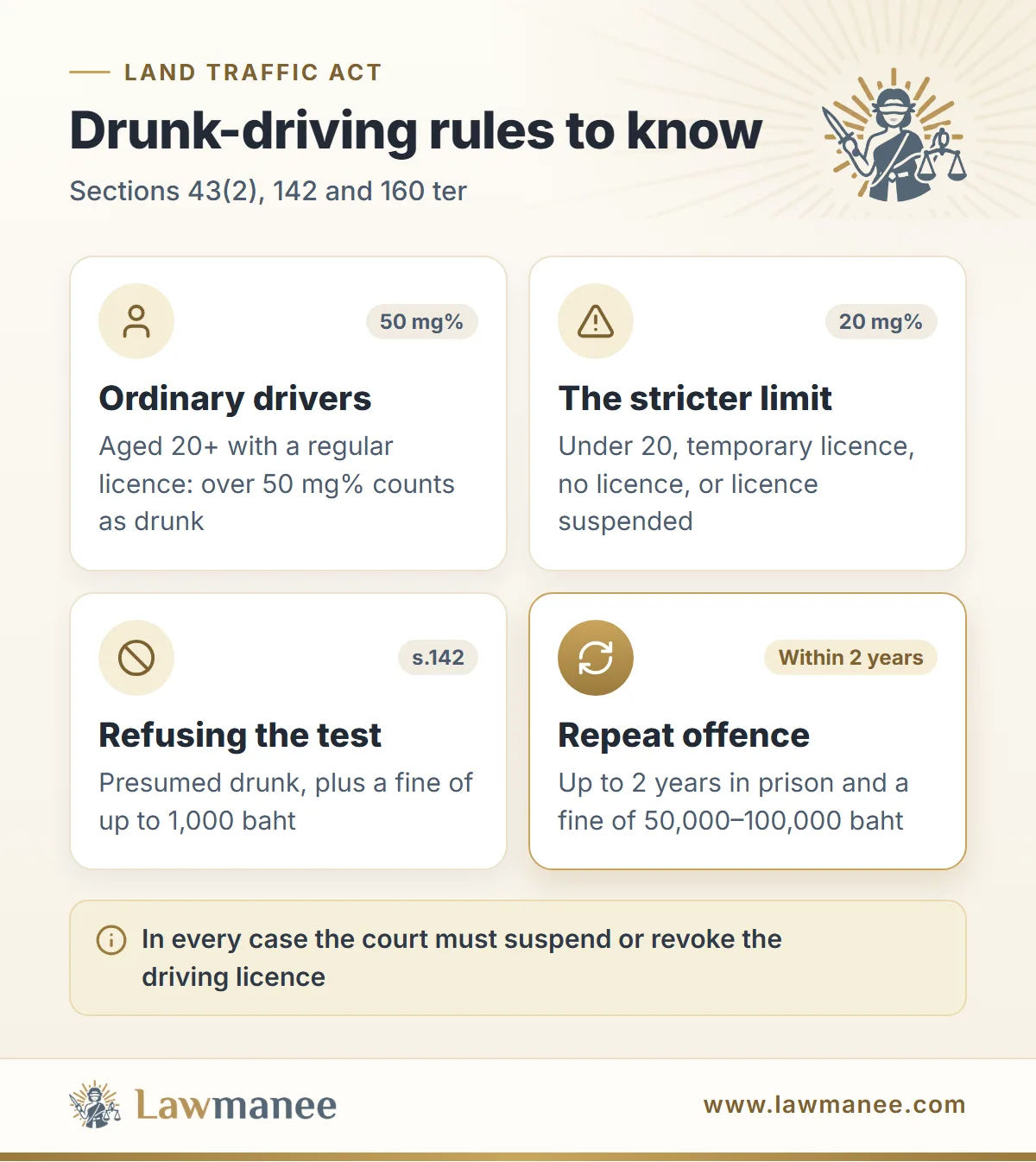
Section 43(2) of the Land Traffic Act forbids driving while drunk on alcohol or any other intoxicant. A ministerial regulation sets the limit by the amount of alcohol in the blood, at two levels:
- Over 50 milligrams per cent for ordinary drivers aged 20 or over with a regular driving licence.
- Over 20 milligrams per cent for drivers under 20, holders of a temporary driving licence, drivers without a licence, and drivers whose licence is suspended or revoked.
Everyone absorbs alcohol differently, and a small amount can already put you over the limit, especially if the 20 mg% limit applies to you. The only safe rule is not to drive at all after drinking.
The penalty for each situation
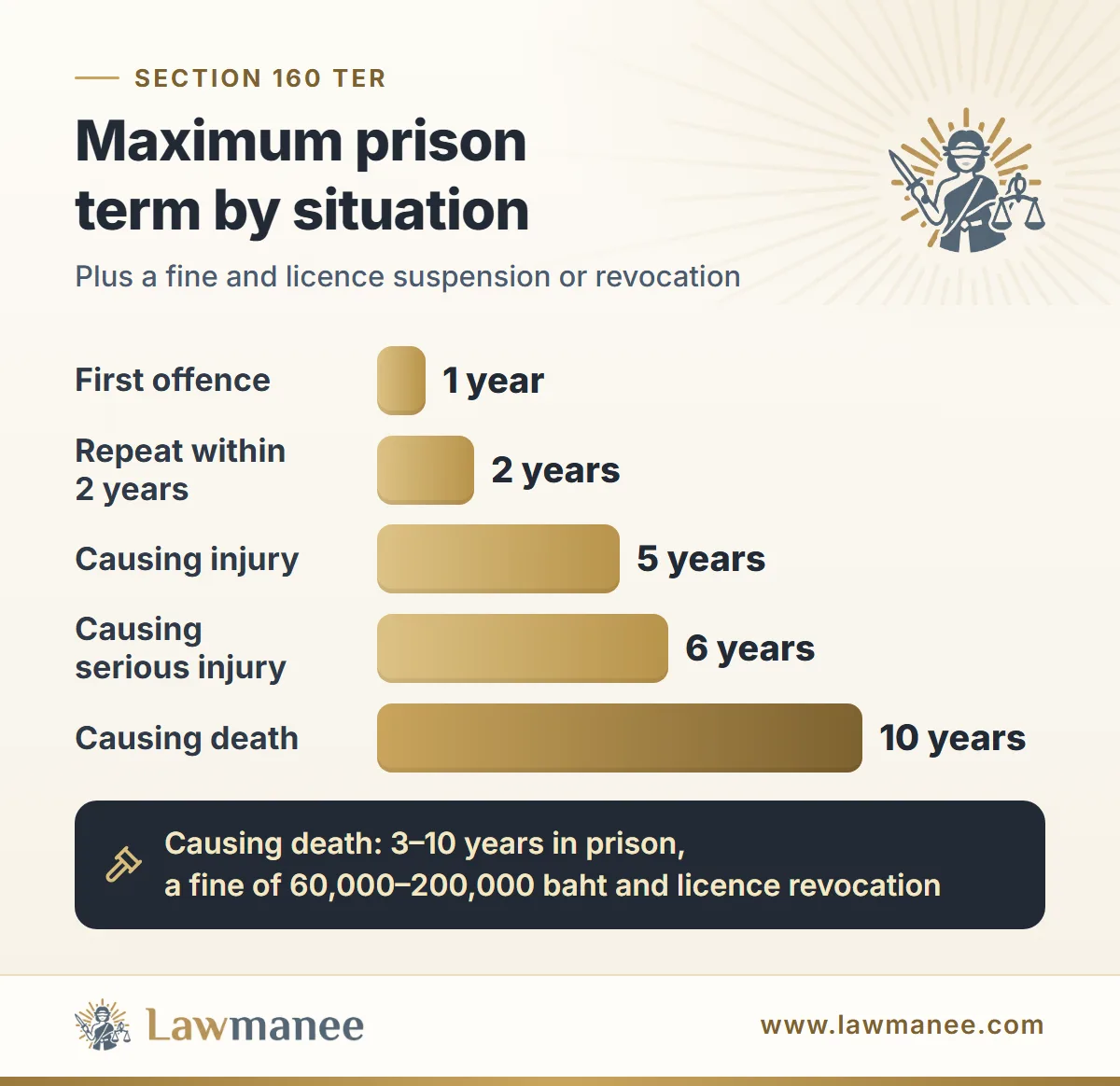
Section 160 ter sets the penalty according to what happened. In every case the court must also suspend or revoke the driving licence.
| Situation | Prison | Fine | Driving licence |
|---|---|---|---|
| Drunk driving, first offence | up to 1 year | 5,000–20,000 baht (or both) | suspended at least 6 months, or revoked |
| Repeat offence within 2 years | up to 2 years | and 50,000–100,000 baht | suspended at least 1 year, or revoked |
| Causing injury | 1–5 years | and 20,000–100,000 baht | suspended at least 1 year, or revoked |
| Causing serious injury | 2–6 years | and 40,000–120,000 baht | suspended at least 2 years, or revoked |
| Causing death | 3–10 years | and 60,000–200,000 baht | revoked |
The point many people miss is the repeat offence within two years of the first offence: the law then requires both prison and a fine, not one or the other as for a first offence.
For example, Mr A is caught driving drunk in January; the court fines him 10,000 baht and suspends his licence for six months. In November of the following year he is caught again, still within two years. This time the law provides for up to two years in prison and a fine of 50,000 to 100,000 baht, and a licence suspension of at least one year or revocation.
Besides the criminal penalty, a driver who injures someone or damages property must also compensate the victims under civil law.
What if you refuse the breath test?
When there are reasonable grounds to suspect a driver is drunk, an officer may order a test. If the driver refuses without good reason, Section 142 paragraph two says the driver is presumed to have driven while drunk, even without a test result.
A driver who refuses can therefore be charged with drunk driving, with the same penalties as someone who failed the test, and separately with disobeying an officer's order, which carries a fine of up to 1,000 baht. Refusing does not get you off; it usually makes things worse.
How courts sentence in practice
In drunk-driving cases where nobody was hurt, the court looks at the circumstances, such as the alcohol level, previous offences and whether the driver pleaded guilty. In many cases the court may suspend the prison sentence and set probation conditions, such as reporting to a probation officer, community service or wearing an electronic monitoring device. Whether a sentence is suspended is always at the court's discretion in each case; nobody can guarantee the outcome.
If you break the probation conditions or offend again, the court may add the suspended sentence to the new one.
If you are charged with drunk driving
- Cooperate with the officers, ask to see the test result, and note the date, time and place.
- Keep every document, such as the arrest record, the summons and the alcohol test result.
- Talk to a lawyer before giving a statement, especially if someone was injured, property was damaged or you have a previous drunk-driving case. A suspect has the right to meet and consult a lawyer.
- Attend court on the dates set: missing a court date can lead to an arrest warrant.
- If there are victims, reach out and negotiate fair compensation; courts usually take this into account when sentencing.
Foreigners driving in Thailand are subject to exactly the same law. A criminal case may also affect your stay or your visa extension, so talk to a lawyer from the start. If you do not read Thai, ask for an interpreter before you sign anything.
Talk to a lawyer about a drunk-driving case
Every drunk-driving case is different, especially when there was an accident or it is a repeat offence. On Lawmanee you can describe your situation for free so that criminal and traffic lawyers can reply in the platform chat, or search lawyers by case type, province and language.